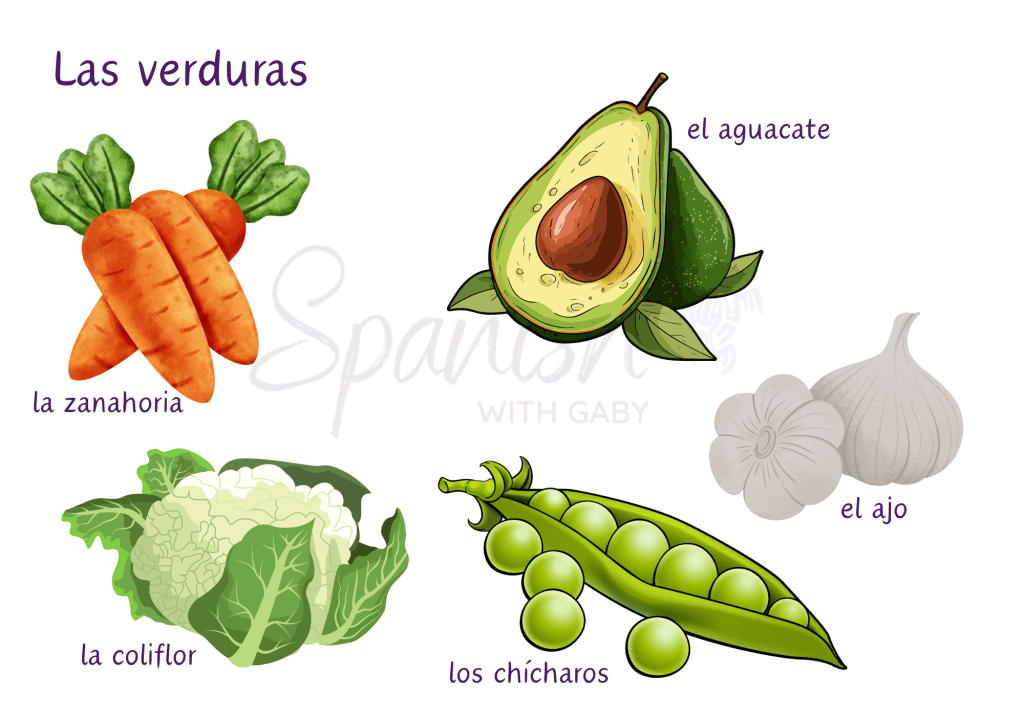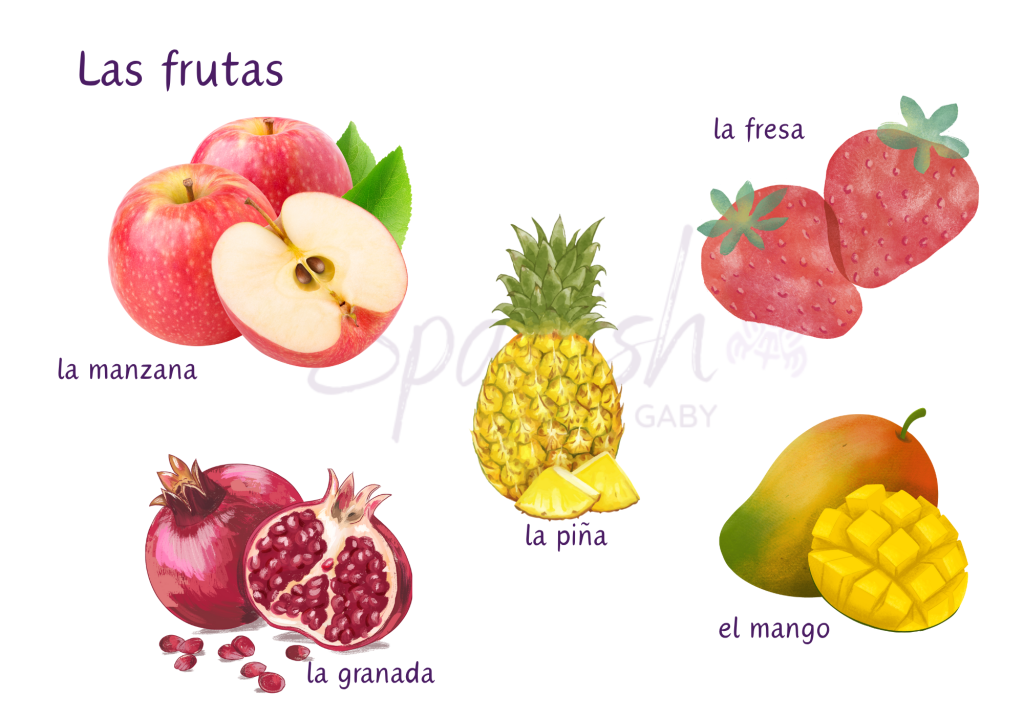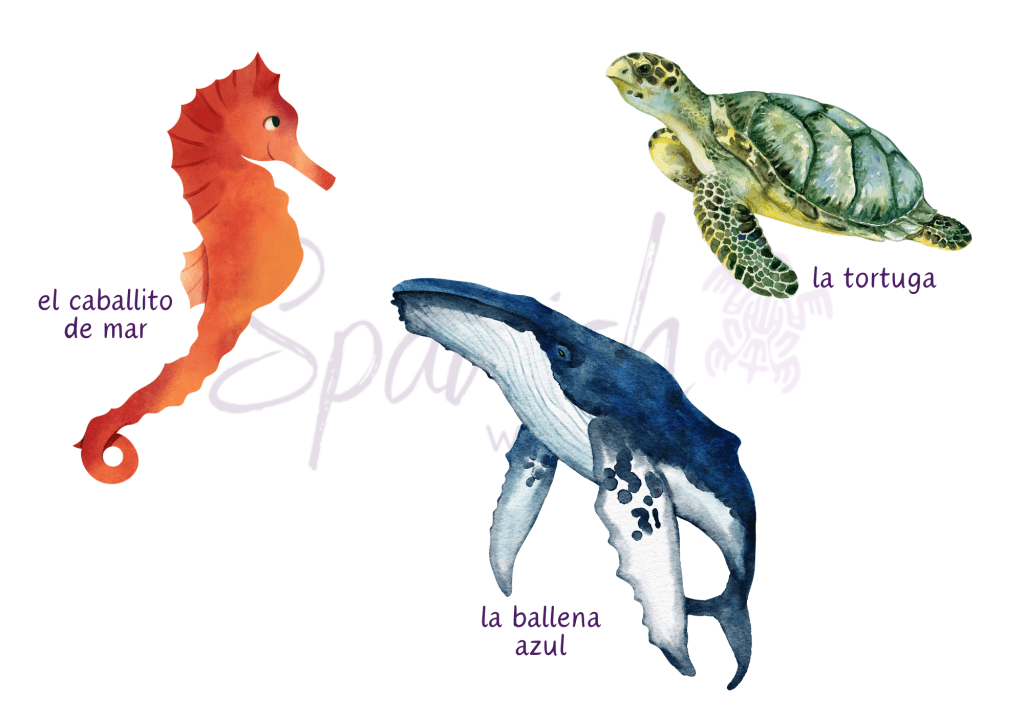
Have you ever gone to a restaurant or supermarket and realized you don’t know the name of a food in Spanish? 🥑 Don’t worry — learning food vocabulary is one of the most useful (and fun!) parts of learning Spanish.
🍽️ Why learning food vocabulary matters
Talking about food is part of everyday life — and everyday conversation! Whether you’re describing what you like to eat, ordering at a restaurant, or talking about a recipe, knowing this vocabulary helps you use Spanish in real situations.
Plus, food is a wonderful window into culture: you’ll learn about traditional ingredients, local dishes, and eating habits from different Spanish-speaking countries.
🥕 Basic words to get started
Here are some food categories that will help you organize your vocabulary:
🗣️ How to practice this vocabulary
Here are a few easy and fun ideas to help you remember new words:
✅ Sort foods by category (fruits, vegetables, etc.) ✅ Write your grocery list in Spanish ✅ Describe a food without saying its name (and have someone guess!) ✅ Create your own “restaurant menu” in Spanish ✅ Use flashcards and repeat the words aloud
📘 Download the full resource
I’ve created a complete printable resource with more than 190 Spanish food words, organized by category and beautifully illustrated.
You can use it to study on your own or as a classroom material if you teach Spanish.
It’s perfect for beginners and intermediate learners who want to learn Spanish in a visual, practical way.
Final thoughts
Learning food vocabulary is a great way to connect with Spanish in daily life — from ordering your favorite dish to talking about what you cook at home.
And remember: Poco a poco, your Spanish gets better. 💛
If you’re learning Spanish, the present tense (presente del indicativo) will soon become your daily companion. You use it to talk about your life, your habits, your thoughts, and the things that are true for you right now — even if they’re not happening this exact second.
Think about it: every time you introduce yourself, describe your routine, or share what you like, you’re already using the present tense.
Let’s explore how it works ✨
💬 When to use the present tense
In Spanish, we use the presente del indicativo for everyday life — not just for actions happening right now.
Use
Example
🕗 Talking about habits or routines
Mi mamá cocina muy bien.
🌎 Talking about general truths
Los perros ladran.
💭 Expressing thoughts, feelings, or present actions
¿Qué piensas? / Quiero descansar.
💡 Note: Many English speakers confuse the Spanish present tense with the “present continuous.” In Spanish:
Trabajo en casa → I work from home (general fact).
Estoy trabajando en casa → I’m working from home (action happening now).
So, don’t worry — you’ll use the simple present much more often than in English.
✍️ Regular verbs: the foundation
Spanish verbs are grouped by their endings: -ar, -er, and -ir. Once you learn the pattern, you can conjugate dozens of verbs easily.
Type
Ending
Verb
Yo
Tú
Él/Ella/Usted
Nosotros/as
Ellos/as/Ustedes
1️⃣ First group
-ar
hablar
hablo
hablas
habla
hablamos
hablan
2️⃣ Second group
-er
comer
como
comes
come
comemos
comen
3️⃣ Third group
-ir
vivir
vivo
vives
vive
vivimos
viven
Examples: Hablo español todos los días. Comes muy saludable. Vivimos en una ciudad pequeña.
💡 Tip: Learning these endings is like having a master key — once you know them, you can unlock hundreds of verbs.
🚿 Reflexive verbs: talking about yourself
Reflexive verbs describe actions you do to yourself — like me levanto (I get up) or me visto (I get dressed).
They use reflexive pronouns (me, te, se, nos, se) before the verb.
Examples: Me levanto temprano todos los días. Nos acostamos tarde los fines de semana.
💡 Tip: In English, you don’t always say “myself,” but in Spanish, it’s essential. Think of me levanto as “I lift myself up.”
🌸 Stem-changing verbs (irregular in the root)
Some verbs change their internal vowel in certain forms — these are called stem-changing verbs. They change in all forms except “nosotros/as”.
Type of change
Verb
Yo
Tú
Él/Ella/Usted
Nosotros/as
Ellos/as/Ustedes
o → ue
volver
vuelvo
vuelves
vuelve
volvemos
vuelven
e → ie
querer
quiero
quieres
quiere
queremos
quieren
e → i
pedir
pido
pides
pide
pedimos
piden
u → ue
jugar
juego
juegas
juega
jugamos
juegan
Examples: Yo vuelvo a casa temprano. Tú quieres aprender español. Ellos piden ayuda en clase. Nosotros jugamos los domingos.
💡 Tip: You can remember it easily — the stem vowel changes only when it’s stressed.
⚡ Totally irregular verbs
Some verbs don’t follow any pattern — but don’t panic! You’ll hear and use them often, so you’ll remember them naturally.
Verb
Yo
Tú
Él/Ella
Nosotros/as
Ellos/as
ir
voy
vas
va
vamos
van
oír
oigo
oyes
oye
oímos
oyen
oler
huelo
hueles
huele
olemos
huelen
huir
huyo
huyes
huye
huimos
huyen
Examples: Voy al gimnasio todos los días. Oigo música cuando estudio. Huelo las flores del jardín.
💡 Tip: These verbs appear everywhere — in songs, conversations, and movies. Pay attention and you’ll start recognizing them easily.
💬 SER and ESTAR — the two “to be” verbs
In Spanish, we have two verbs that mean “to be”: ser and estar. They’re small words with a big personality — and knowing when to use each will make your Spanish sound much more natural.
Verb
Yo
Tú
Él/Ella
Nosotros/as
Ellos/as
ser
soy
eres
es
somos
son
estar
estoy
estás
está
estamos
están
Ser is for who you are — your identity, profession, or permanent traits: 👉 Soy profesora. 👉 Somos amigos desde la infancia.
Estar is for how you feel or where you are right now: 👉 Estoy cansada. 👉 Estamos en casa.
💡 Remember: Ser = what you are. Estar = how you are.
📚 Want to master them? Check out my full article 👉 SER vs ESTAR: cómo usarlos sin confundirte. It includes simple rules, examples, and a free practice sheet to help you finally feel confident with both verbs.
📝 Your turn!
Now it’s time to practice. Write five sentences about yourself using the presente del indicativo:
1️⃣ A daily habit 2️⃣ A general truth 3️⃣ A thought or desire 4️⃣ A reflexive verb 5️⃣ An irregular verb
Example: Me levanto temprano, tomo café y trabajo desde casa. ☕
💡 Tip: Writing about your real life is one of the best ways to remember new verbs — because every word means something to you.
✨ In short
The present tense is everywhere — in your routines, your thoughts, and your daily conversations. It’s your key to expressing yourself in Spanish naturally and confidently.
Learning Spanish doesn’t have to be stressful or time-consuming. The secret is not studying for hours, but building small, consistent habits that keep the language alive every day.
Here are some mini habits you can start today, along with resources to make them fun and practical:
🎧 Listen for 5 Minutes a Day
Pick a short podcast or YouTube channel. Just let it play and focus on catching familiar words. 👉 Try: How to Spanish (YouTube) or TED en Español (Podcast).
✍️ Write One Sentence Daily
Use a notebook or your phone notes. Write about your mood, plans, or something you see. 👉 Example: Use prompts from Spanish Short Stories for Beginners for inspiration.
📖 Read a Few Lines Out Loud
Choose texts that interest you—blogs, stories, or even song lyrics. Reading aloud connects pronunciation, rhythm, and meaning. 👉 Start with El Principito or the book Doce historias muy cortas para mejorar tu vocabulario.
💡 Word of the Day
Learn one new word daily and use it in your sentence. 👉 Apps like SpanishDict or DuoCards can help you build vocabulary step by step.
🎶 Celebrate with Music
Music is one of the easiest ways to add Spanish to your routine—sing along to practice rhythm and pronunciation. 👉 Listen to Natalia Lafourcade, Silvana Estrada, or Karol G.
🌟 Remember, consistency beats intensity. With mini daily habits, you’ll improve your Spanish poco a poco—without feeling overwhelmed.
💡 Want more ideas? 📥 You can download my full list of extra Spanish resources (podcasts, YouTube channels, music, books, and more) to explore all the recommendations in one place.
En español, todas las palabras que nombran personas, animales o cosas tienen género (masculino o femenino) y número (singular o plural). Aprender estas reglas te ayudará a hablar con más claridad y confianza.
Aquí te explico lo más importante, con ejemplos fáciles y excepciones que debes conocer.
👤 ¿Qué es el género?
Los sustantivos (nombres) pueden ser masculinos o femeninos. Esto también afecta a los artículos (el, la, un, una) y adjetivos (alto, baja, interesante), que deben coincidir con el género del sustantivo.
🟦 Masculino:
Palabras que terminan en -o, -e, o en consonante ✅ el niño, el coche, el profesor
🟪 Femenino:
Palabras que terminan en -a, -ción, -sión, -dad, -tad ✅ la niña, la casa, la canción, la ciudad
⚠️ Excepciones comunes
Masculino
Femenino
el día
la mano
el planeta
la radio
el idioma
la flor
Además, algunos sustantivos no cambian entre masculino y femenino: ✅ el estudiante / la estudiante ✅ el artista / la artista
Y otros cambian totalmente: ✅ el actor / la actriz ✅ el rey / la reina ✅ el hombre / la mujer
🐾 ¿Y los animales?
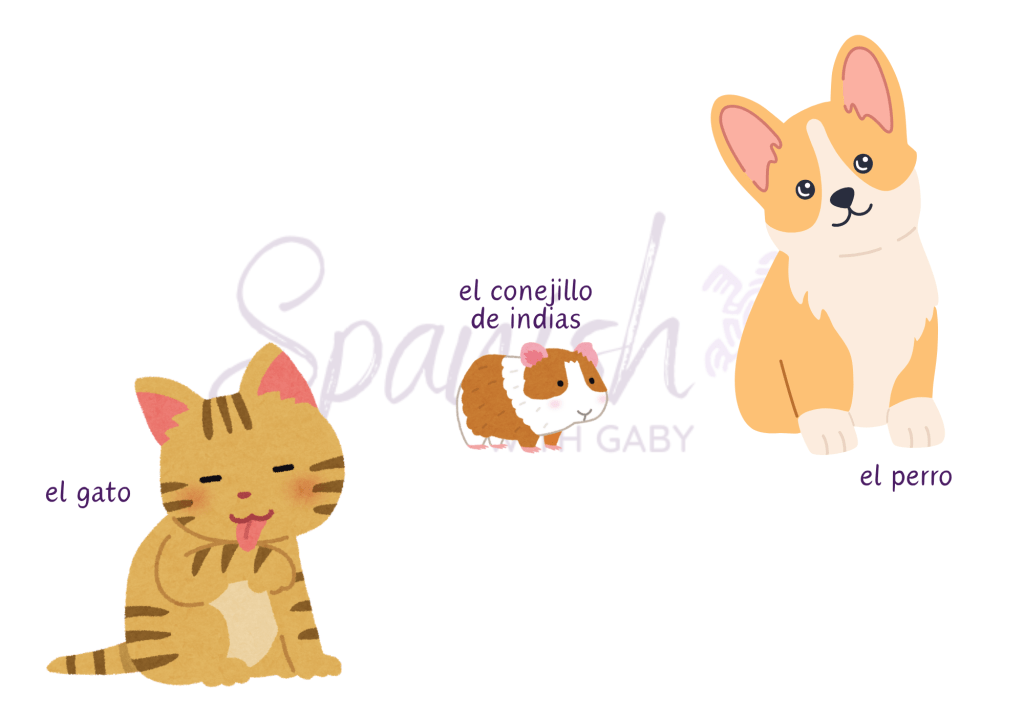
Muchos animales tienen versión masculina y femenina: ✅ el gato / la gata, el león / la leona, el perro / la perra
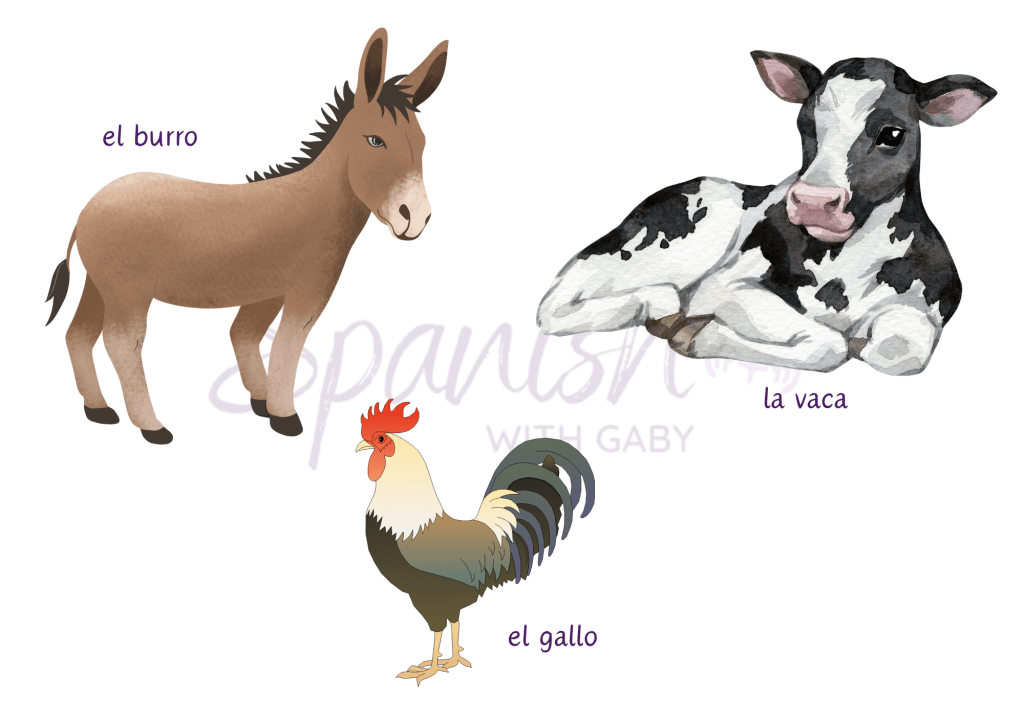
Pero otros usan una palabra diferente: ✅ el caballo / la yegua, el gallo / la gallina, el toro / la vaca
🔢 ¿Qué es el número?
El número indica si hablamos de una sola cosa (singular) o más de una (plural).
📌 Regla general:
Si termina en vocal sin tilde → +s 👉 libro → libros, casa → casas
Si termina en consonante o vocal con tilde → +es 👉 papel → papeles, menú → menús, rubí → rubíes
Si termina en -z → cambia la z por -ces 👉 lápiz → lápices, pez → peces
💡 Casos especiales
Algunas palabras no cambian en plural: 👉 el lunes → los lunes, el paraguas → los paraguas
Algunas solo se usan en plural: 👉 las tijeras, los pantalones
Cuando mezclamos masculino y femenino, el plural es masculino: 👉 el niño + la niña = los niños 👉 el padre + la madre = los padres
📝 ¿Quieres practicar?
He preparado una hoja imprimible con ejercicios para practicar: ✔️ Identificar el género y número de sustantivos ✔️ Cambiar de singular a plural ✔️ Completar frases con adjetivos que concuerden
Traveling to a Spanish-speaking country? Knowing a few key phrases can make your trip smoother, more enjoyable, and a lot less stressful. Here are 10 survival phrases every beginner should learn — ¡poco a poco!
1. ¿Dónde está el baño?
Where is the bathroom? Essential for every traveler — you’ll use this one often!
2. ¿Cuánto cuesta?
How much does it cost? Perfect for shopping, markets, and restaurants.
3. Una mesa para dos, por favor.
A table for two, please. Use it at restaurants to get seated quickly.
4. Quiero esto, por favor.
I want this, please. Pointing + this phrase = confident ordering or shopping.
5. No hablo mucho español.
I don’t speak much Spanish. It sets expectations and shows respect for the language.
6. ¿Puede ayudarme?
Can you help me? Use this when you’re lost, confused, or need assistance.
7. Estoy perdido / Estoy perdida.
I’m lost. Change “perdido” to “perdida” if you identify as female.
8. ¿Habla inglés?
Do you speak English? Helpful when communication becomes difficult.
9. La cuenta, por favor.
The check, please. You’ll need this after meals — and it’s polite to ask.
10. Gracias / Muchas gracias
Thank you / Thank you very much Never underestimate the power of being polite!
🧳 Tip for learners:
You don’t need perfect grammar to be understood — confidence and kindness go a long way. Write these phrases down in your study notebook, say them out loud, and practice them before your trip.
Learning Spanish is a journey — and good note-taking can help you go further, faster. Whether you’re studying on your own or taking classes, here’s how to make the most of your notes and build habits that support your progress.
1. Use clear sections in your notebook
Divide your notes into categories like vocabulary, grammar, useful phrases, mistakes, and goals. ✅ This helps you stay organized and find things quickly when reviewing.
2. Write by hand (if possible)
Writing things down by hand helps your brain retain information better. Use different colors, headings, and underlining to make important things stand out. 🖍️ Highlight key examples or words you want to remember.
3. Don’t write everything — write what matters
Instead of copying full lessons or explanations, focus on:
Key examples
Simple summaries of grammar rules
Your own doubts and frequent mistakes
Making your notes personal makes them more useful.
4. Create a “mistake zone”
Have a special section to record your most common errors and their corrections. ✅ Revisiting your mistakes regularly will help you stop repeating them.
5. Review and update your notes
Your notebook is a living tool — not just a place to store information. 🗓️ Set a time each week to review what you’ve written. 🔁 Add new examples or check off what you’ve mastered.
✨ Bonus tip: Make it your Spanish space
Don’t limit your notebook to just vocabulary and grammar. Use it creatively:
Write short journal entries in Spanish
Summarize videos, songs, or classes
Create fun word lists (food, emotions, travel)
Your notebook can become a personal reflection of your learning journey.
📘 Want a study notebook made just for Spanish learners?
I created a printable Spanish study notebook that’s simple, beautiful, and organized — so you can focus on what matters most: learning. It includes dedicated pages for vocabulary, goals, mistakes, journaling, and more.
Learning Spanish is an exciting journey, but just like with any new language, it’s normal to make mistakes in the beginning. In this post, I’ll share the most common mistakes Spanish learners make — and how you can avoid them to make faster progress!
1. Translating word for word from your native language
❌ Example:Estoy caliente (when you mean I’m hot)
👉 Why it’s a mistake: Some expressions don’t translate literally. In Spanish, you use “tener” (to have) for physical sensations like being hot, hungry, or afraid (Tengo calor, tengo hambre, tengo miedo).
✅ Tip: Learn complete expressions as fixed phrases. Don’t try to translate each word — memorize the whole structure.
2. Forgetting noun genders (el / la)
❌ Example:La problema ✅ Correct:El problema
👉 Why it’s a mistake: Every noun in Spanish is either masculine or feminine. Some don’t follow clear rules, so you have to learn the article with the noun.
✅ Tip: When you learn new vocabulary, always include the article (el or la) to help you remember the correct gender.
3. Mixing up «ser» and «estar»
❌ Example:Estoy profesora ✅ Correct:Soy profesora
👉 Why it’s a mistake: Both verbs mean “to be,” but they’re used in different situations.
Use ser for identity: Soy mexicana, soy estudiante.
Use estar for temporary states or locations: Estoy cansado, estoy en casa.
✅ Tip: Learn through examples and make your own sentences to practice. Check our post on this topic: Blog or get the complete guide on this verbs: Ser vs Estar
4. Mispronouncing letters based on English
❌ Common mistake: Saying the “h” sound or pronouncing “ll” like an English “L”
👉 Important to know:
The “h” is silent in Spanish.
In most accents, “ll” is pronounced like a “y”: llamo = yamo
✅ Tip: Listen to native Spanish speakers (on YouTube, in podcasts, or songs) and repeat what you hear. Imitation is key to good pronunciation!
5. Being afraid to make mistakes
Many beginners hold themselves back because they want to speak perfectly from day one.
👉 Reality: Mistakes are part of the learning process. Everyone makes them!
✅ Tip: Talk, write, mess up — and learn from it! The more you practice, the faster you’ll gain confidence and fluency.
✨ Gaby’s Tip
An error tracking sheet is an excellent tool for active learning. Here’s a free downloadable worksheet that you can use digitally or in print.
Use this sheet every time you make a mistake while speaking or writing in Spanish. And, of course, reflect on why it was a mistake (grammar? pronunciation? vocabulary?).
What about you?
Have you made any of these mistakes? Which ones surprised you? Let me know in the comments!
Have you ever wondered how to express where something is in Spanish? Today we’re going to discover it together! Prepositions of place are words we use to indicate the location of people, objects, or places in relation to others. They are essential for communicating clearly and naturally.
Uses of prepositions of place
Place prepositions answer questions like Where is…? or Where does it happen…? Some of the most common uses include:
Indicating position:
El libro está sobre la mesa. (The book is on the table.)
Showing proximity or distance:
Mi casa está cerca de la playa. (My house is near the beach.)
Prepositions of place in action
Here are some of the most commonly used prepositions of place in Spanish, along with examples:
💡 Tip: Some prepositions can be used interchangeably, but the tone can change slightly. For example, “afuera” is more casual than “fuera de.”